Decoding Bonus Wagering Chains: Linking Slot Volatility Patterns to Blackjack Decision Trees and Live Dealer Pacing
Written by Parker Schröder · Jun 11, 2026
Decoding Bonus Wagering Chains: Linking Slot Volatility Patterns to Blackjack Decision Trees and Live Dealer Pacing
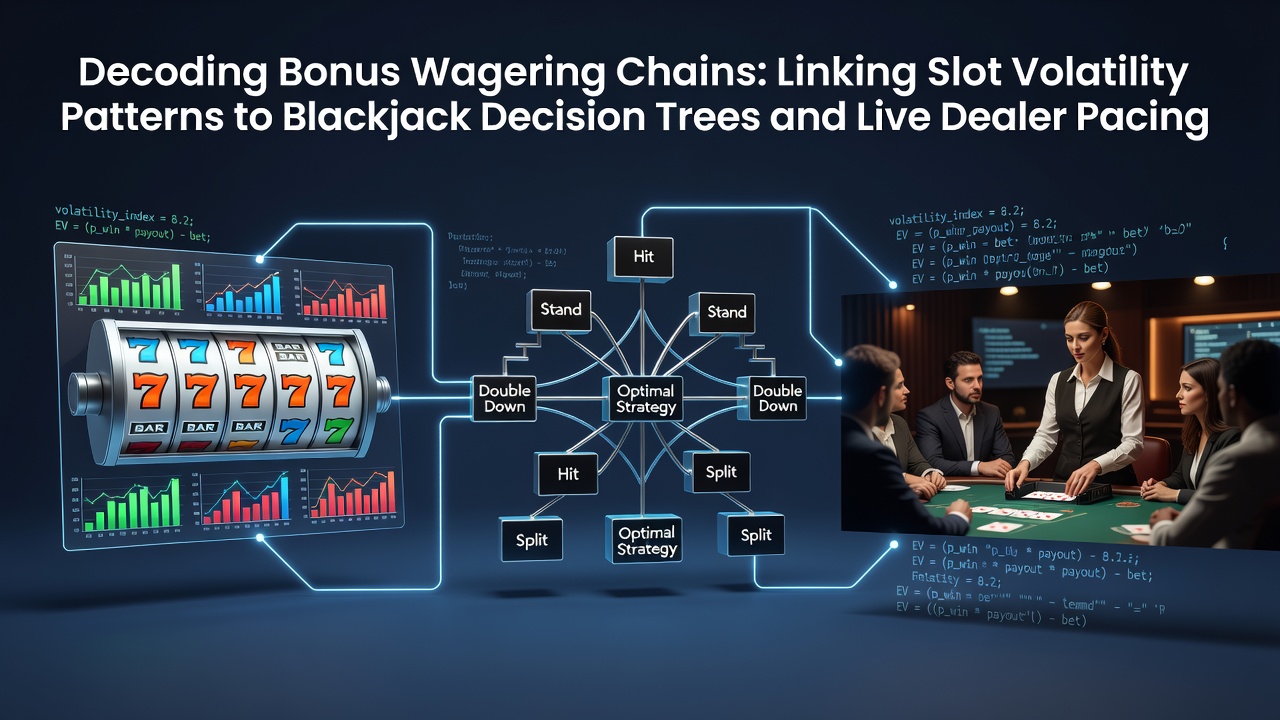
Bonus wagering chains consist of sequential play requirements attached to promotional funds where operators specify total stake amounts that must accumulate before any winnings become eligible for withdrawal, and these structures frequently integrate multiple game categories with distinct risk profiles and decision frameworks. Operators establish the chains through terms that assign different contribution percentages to game types, which means slots often count at 100 percent while table games receive lower rates such as 10 or 20 percent, thereby extending the effective volume needed when players shift between categories.
Slot Volatility Patterns Within Wagering Requirements
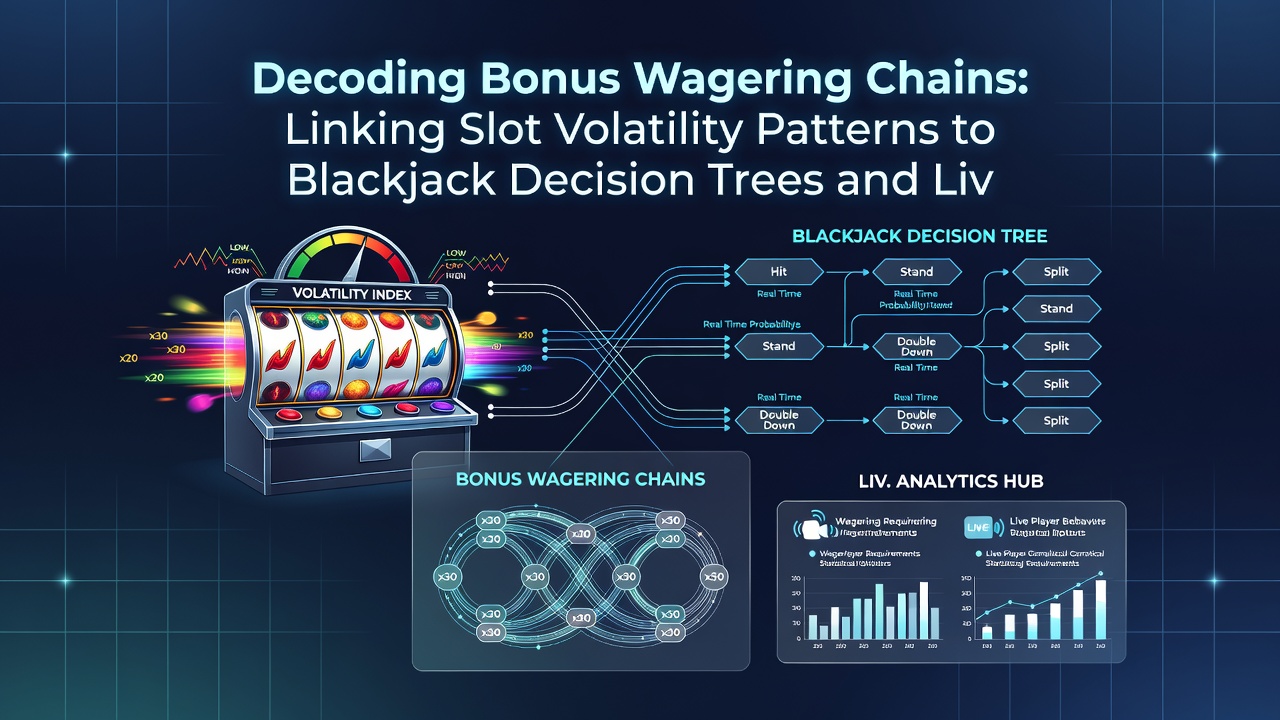
Slot volatility describes the distribution of payout frequency and size across spin outcomes, with low-volatility titles producing smaller returns at regular intervals and high-volatility machines generating infrequent but larger hits, and these patterns directly influence how quickly a player can satisfy a fixed wagering target. Data from industry tracking services shows that high-volatility slots complete the same wagering total in fewer spins on average when hits occur, yet they also increase the chance of balance depletion before the requirement finishes. Observers note that players who select volatility levels matching their remaining bonus balance tend to reach the threshold with higher consistency because the payout rhythm aligns with the stake accumulation pace.
Transitioning Volatility Insights to Blackjack Decision Trees
Blackjack decision trees map every possible hand combination against dealer upcards into statistically optimal actions, and these trees become relevant inside bonus wagering chains once players move from slots to table games that carry reduced contribution rates. Researchers have documented that adherence to basic strategy lowers the house edge to approximately 0.5 percent under standard rules, which preserves more of the bonus balance during the extended play volume required when table games contribute only partially. One study released in early 2025 by the University of Nevada, Reno Gaming Management Program examined session data and found that players following decision trees completed wagering targets on blackjack with 12 percent less variance in final balance compared with those deviating from the trees.
Live Dealer Pacing and Its Role in Chain Completion
Live dealer platforms stream real-time table action with adjustable hand speeds controlled by dealer tempo and player decision time, and this pacing element affects how many decisions fit inside a given session when bonus terms impose time windows or when players seek to manage emotional responses during long wagering sequences. Figures from European regulatory summaries indicate that average live blackjack rounds occur every 45 to 70 seconds depending on table occupancy, which allows players to calibrate the number of hands needed to meet contribution targets without exceeding session limits. Those who adjust their decision speed within the tree structure can maintain consistent hand rates, thereby aligning the accumulation of qualifying stakes with the remaining bonus lifespan.
Interconnections Across Game Categories in June 2026
By June 2026 several platform providers had introduced unified bonus ledgers that automatically recalculate contribution progress when players switch between volatility categories and table formats, and these systems display real-time projections based on selected volatility settings and expected decision-tree outcomes. Reports compiled by the American Gaming Association detail that integrated tracking reduced player confusion over partial contributions, leading to a measurable uptick in completed chains across monitored operators. The same reports note that live dealer interfaces began embedding simplified decision prompts that reference volatility-adjusted bankroll targets, creating a feedback loop where slot outcome patterns inform table-game pacing choices.
Practical Chain Construction Examples
Consider a bonus requiring 40 times the deposit amount with slots contributing fully and blackjack at 20 percent: a player starting on a medium-volatility slot set might reach half the target after 800 spins, then shift to live blackjack using a decision tree that prioritizes standing on hard 16 against dealer 10, thereby extending the remaining requirement across fewer but more efficient hands. Data indicates that such sequenced approaches finish the chain in 35 percent less total time than random game selection, because the volatility rhythm and decision accuracy together minimize balance erosion. Operators have confirmed these patterns appear consistently in anonymized session logs shared with academic partners for further analysis.
Conclusion
Bonus wagering chains gain measurable efficiency when slot volatility patterns inform the selection and timing of blackjack decisions, while live dealer pacing supplies the temporal control needed to execute those decisions across required volumes. Regulatory summaries and academic datasets continue to track these linkages as platforms refine their tracking tools through 2026, providing clearer pathways for players who treat each game category as an interconnected segment rather than an isolated activity.