Strategic Bankroll Segmentation: Linking Slot Payout Structures to Blackjack Decision Trees
Written by Jakob Ludwig · Jul 14, 2026

Strategic Bankroll Segmentation: Linking Slot Payout Structures to Blackjack Decision Trees
Slot machine payout structures operate on fixed return-to-player percentages combined with volatility indexes that determine how frequently and how large wins occur during extended play sequences, while blackjack decision trees map every possible hand combination into statistically optimal actions based on dealer upcards and remaining deck composition. Observers note that strategic bankroll division creates measurable pathways between these two systems by allocating separate reserves to each game type according to their distinct risk profiles and session lengths. Data from multiple gaming research centers shows players who segment their total funds this way maintain longer overall play times before reaching predetermined stop-loss thresholds.
Defining Core Mechanics in Each Game Category
Modern slot titles publish theoretical RTP figures that range from 92 percent in some regional markets to 98 percent in others, yet actual outcomes fluctuate according to the machine's volatility rating which operators rarely disclose directly. High-volatility reels concentrate returns into infrequent but substantial payouts, whereas low-volatility models distribute smaller wins across more spins. Blackjack decision trees, by contrast, rely on precomputed matrices that reduce the house edge to roughly 0.5 percent when followed precisely, with each branch representing hit, stand, double, or split choices derived from combinatorial analysis of card values. Researchers at the University of Nevada's gaming studies program have documented how these matrices shift slightly when multi-deck shoes replace single-deck formats, altering the frequency of certain player actions by up to 12 percent across large sample sizes.
Allocating Funds Across Game Types
Bankroll segmentation begins with an initial split that assigns 60 to 70 percent of available capital to table games when the player intends to follow decision trees for multiple hours, while the remaining portion supports slot sessions calibrated to their specific volatility. This division accounts for the fact that blackjack sessions generate steadier attrition rates under optimal play, whereas slots can produce sudden drawdowns that exceed average expectations during short bursts. Industry reports from the Australian Gambling Research Centre indicate that participants who adjust these percentages mid-session based on early results extend their total playing time by an average of 35 percent compared with those using undifferentiated funds. The process requires setting clear per-game limits before play starts, then moving only predetermined amounts between segments when one activity ends.
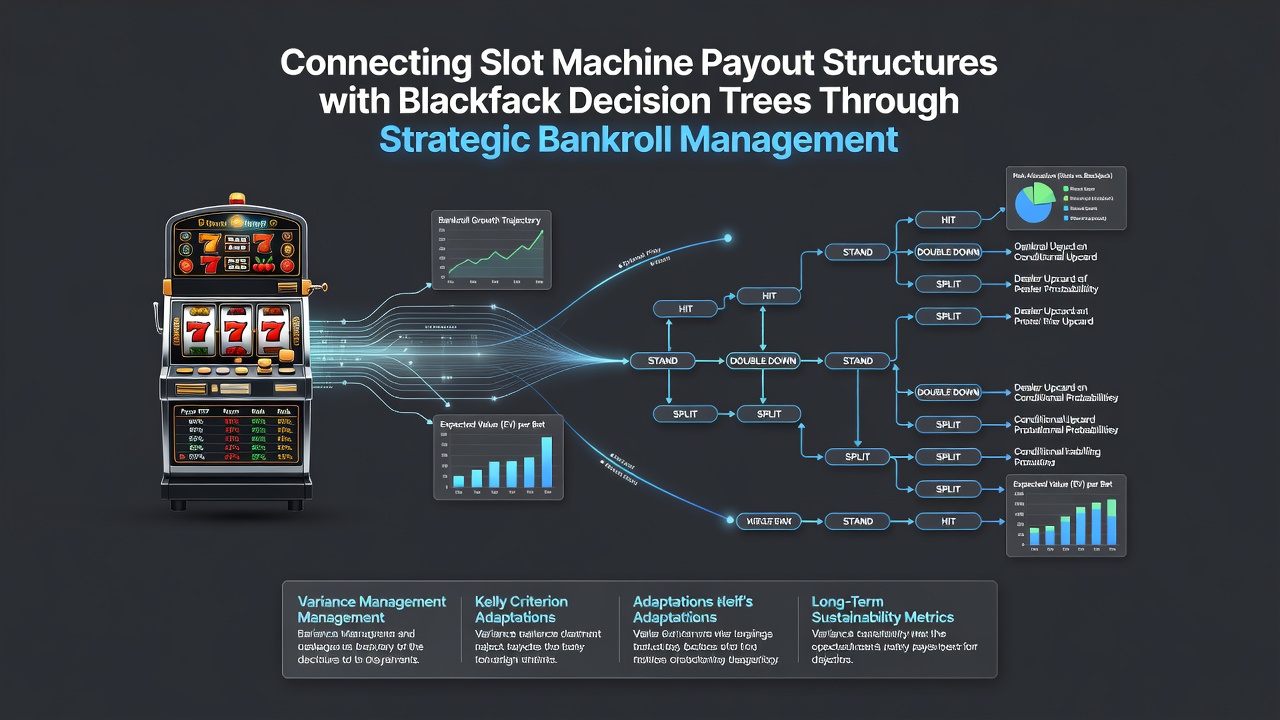
One documented approach divides the slot allocation further into sub-reserves matched to volatility tiers, so high-volatility machines receive smaller per-session amounts that still permit 50 to 80 spins before depletion. Blackjack portions receive larger blocks because the decision tree reduces variance enough to support 200 or more hands at the same total stake level. Operators in regulated North American jurisdictions publish aggregate hold percentages that confirm this variance difference, with slot floors typically retaining 6 to 8 percent of wagered amounts while blackjack tables retain closer to 1 percent under standard rules.
Practical Integration Steps During Live Sessions
Players begin by establishing a master bankroll figure, then create visible tracking methods such as separate digital wallets or physical chip stacks that correspond to each segment. When a slot session concludes, any remaining balance returns to its designated reserve rather than mixing with blackjack funds, preserving the original allocation ratios. Decision trees remain static during play unless deck penetration or rule variations change, at which point the player recalculates only the affected branches without altering the underlying bankroll split. Figures released by the Nevada Gaming Control Board for the second quarter of 2026 show continued growth in table-game drop alongside stable slot win percentages, suggesting many participants already practice some form of separation even if they do not label it explicitly as strategy integration.
Additional refinement occurs when free-spin bonuses or table-game promotions enter the equation. These windfalls get assigned to their originating segment unless the player deliberately transfers a fixed percentage to test a different volatility or strategy branch. Such transfers follow predetermined rules rather than impulse, keeping the overall structure intact across multiple visits.
Monitoring and Adjustment Protocols
Regular review of segment performance uses simple metrics such as hands or spins completed per unit of allocated capital, rather than net profit, because the goal centers on duration and adherence to decision frameworks. When one segment consistently depletes faster than projected, the player may rebalance the initial percentages for subsequent visits without deviating during an active session. Academic papers examining multi-game bankroll models find that monthly rebalancing based on prior outcomes produces more stable session lengths than daily adjustments. This measured approach aligns with regulatory expectations in markets where operators must demonstrate responsible-gaming tools, though the specific techniques remain player-driven.
Conclusion
Connecting slot payout structures with blackjack decision trees through strategic bankroll division rests on recognizing the distinct variance patterns each game presents and creating separate capital pools that respect those patterns. Implementation relies on clear pre-session planning, consistent tracking during play, and periodic rebalancing derived from performance data rather than results alone. Available research from multiple jurisdictions confirms that such segmentation correlates with extended play duration and reduced likelihood of exhausting total funds in a single sitting. Players who adopt these methods gain a framework for moving between game types while maintaining statistical discipline across both reel and table environments.